
Geen categorie
They Dance Like No One Is Watching
Mar
(part 3)
I have shot swans on a frozen lake before sunrise. I have stood in between pack ice while Steller’s eagles fought over fish at uncomfortably close range. My arms ache. My fingers have stopped communicating with the rest of my body. I am running on cold air and adrenaline. How much more can I take?
And then we get to the cranes.
And everything changes.
If the eagles are kings — raw, aggressive, commanding — then the red-crowned cranes are royalty of an entirely different order. They are aristocrats. Refined, unhurried, completely at ease in their own magnificence. Where the eagles demanded your attention, the cranes simply have it. You give it willingly, without quite knowing when it happened.
Something happens to me here that I didn’t expect. I feel myself slow down. Not just physically — but somewhere deeper. The noise in my head, the tension in my shoulders, the relentless focus of days of shooting — it all quietly releases. These birds do something to me. They calm me in a way I can’t fully explain. As if their pace becomes my pace, their stillness becomes my stillness. For the first time on this entire trip, I am not chasing anything.
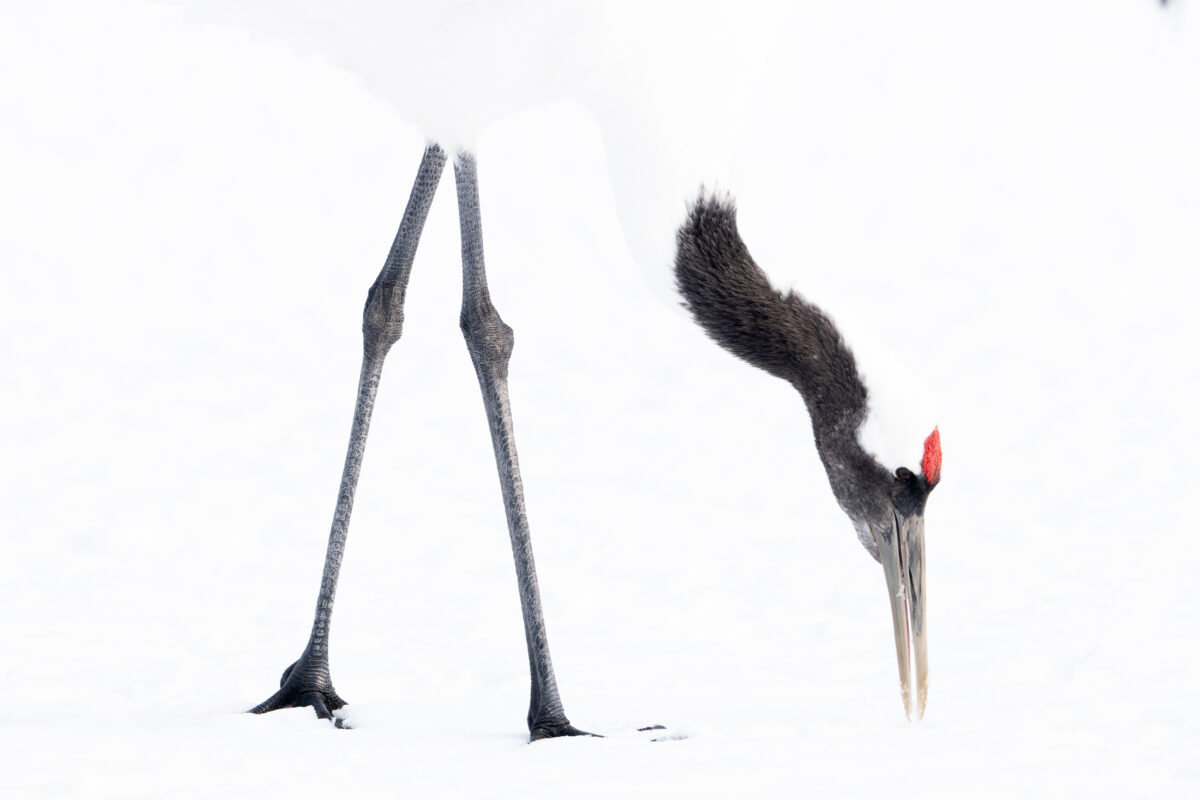
They move slowly. Every step is deliberate, considered — placed on the snow with a precision that borders on ceremony. There is no wasted movement. No urgency. They exist at their own pace and the world, it seems, has always been willing to wait for them.
And then they dance.
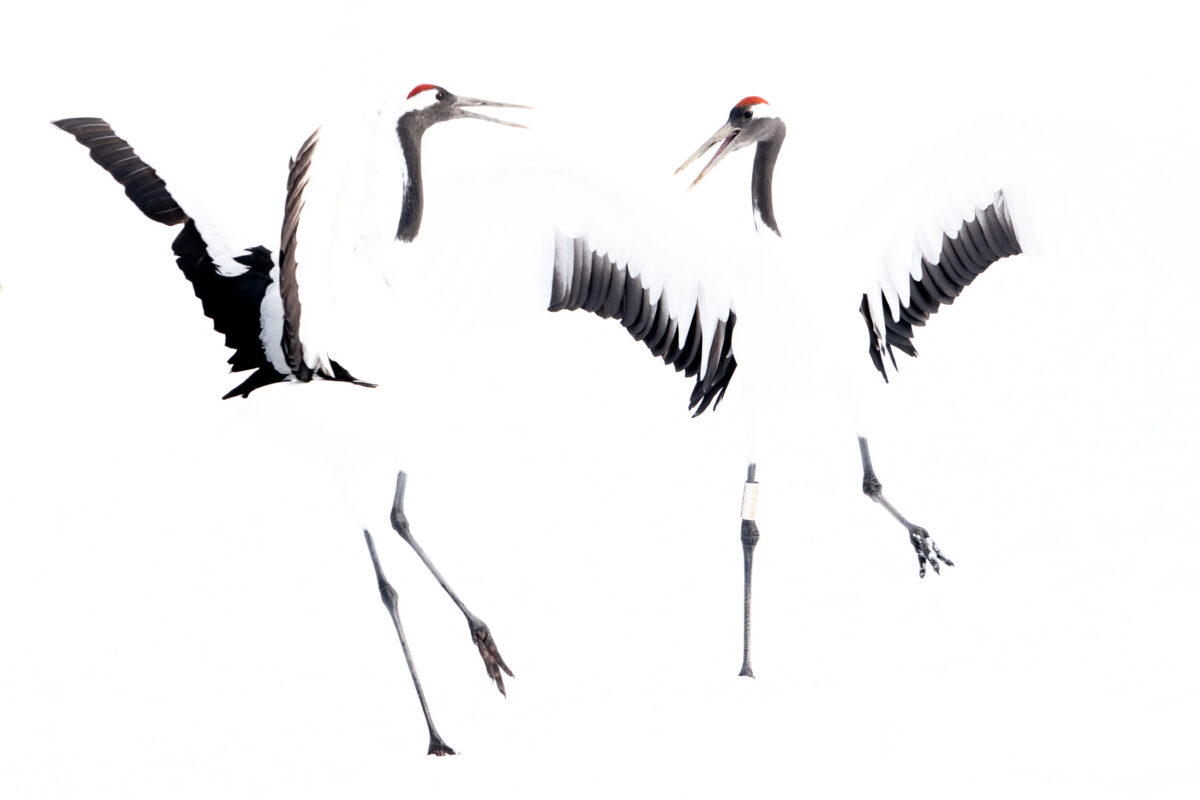
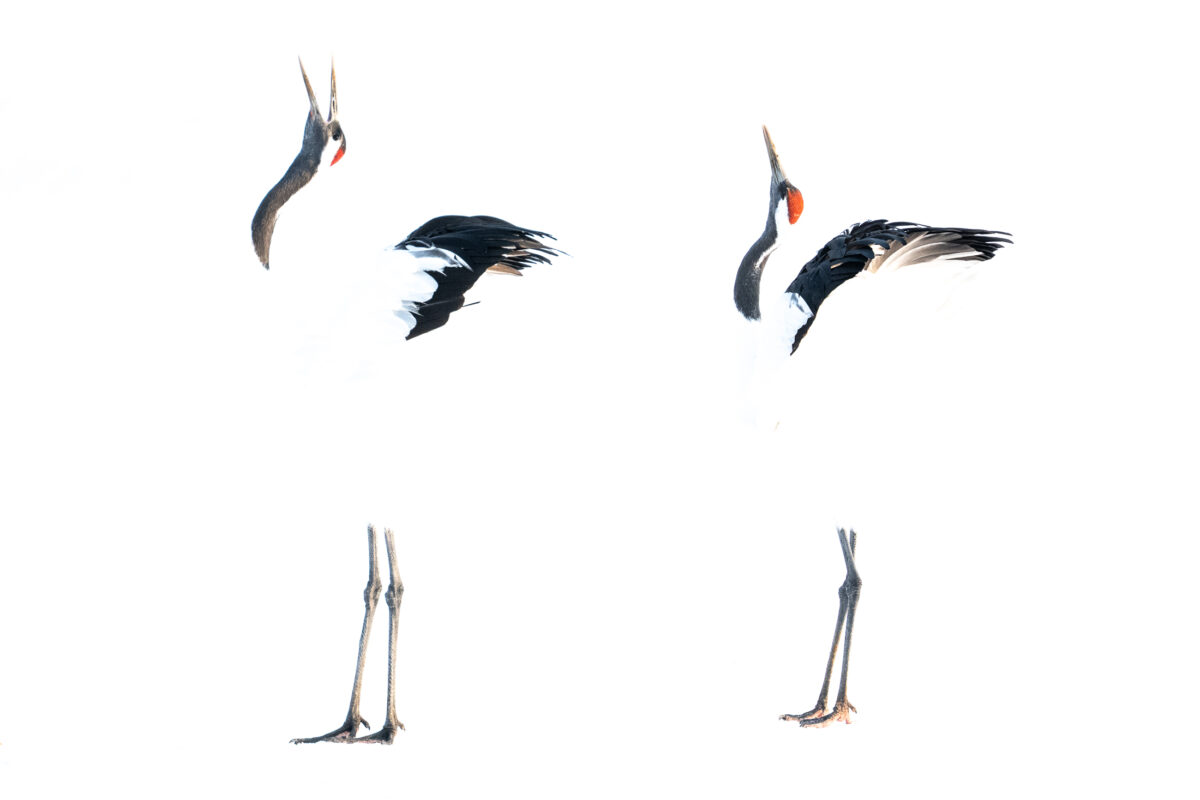
I have seen a lot of things through a camera lens. But nothing — nothing — has stopped me quite like this. Two cranes facing each other, bowing deeply, then rising, then leaping — wings spreading wide and white against the winter sky, bodies lifting off the snow in a movement so fluid it seems to defy their size. They bow again. They call. They circle each other with a courtly, unhurried grace that feels less like animal behaviour and more like performance art refined over thousands of years.
It is a waltz. There is no other word for it. A slow, breathtaking waltz performed on a white stage, with snow falling softly and the pale winter light catching every feather.
And I realise, standing there in the snow, that this is exactly what I needed. Not just on this trip — but perhaps in general. This reminder that slow is not the opposite of powerful. That stillness is not the absence of something. The cranes know this. They have always known this.
I came to this workshop afraid of birds. Genuinely, irrationally afraid. The swans softened something in me. The eagles blew the door wide open with sheer force. But the cranes — the cranes walked through that door with complete elegance and made themselves completely at home.
They are distinguished. They are classy. They are, without question, my absolute favourite of the three. Of everything. Of the whole trip.
If you ever have the chance to stand in a snowy field in Hokkaido and watch red-crowned cranes dance at dawn — you go. You skip breakfast. You ignore the cold. You go.
My arms don’t work anymore. My toes checked out hours ago. I can’t remember what warm feels like.
I’ll sleep when I get home.